


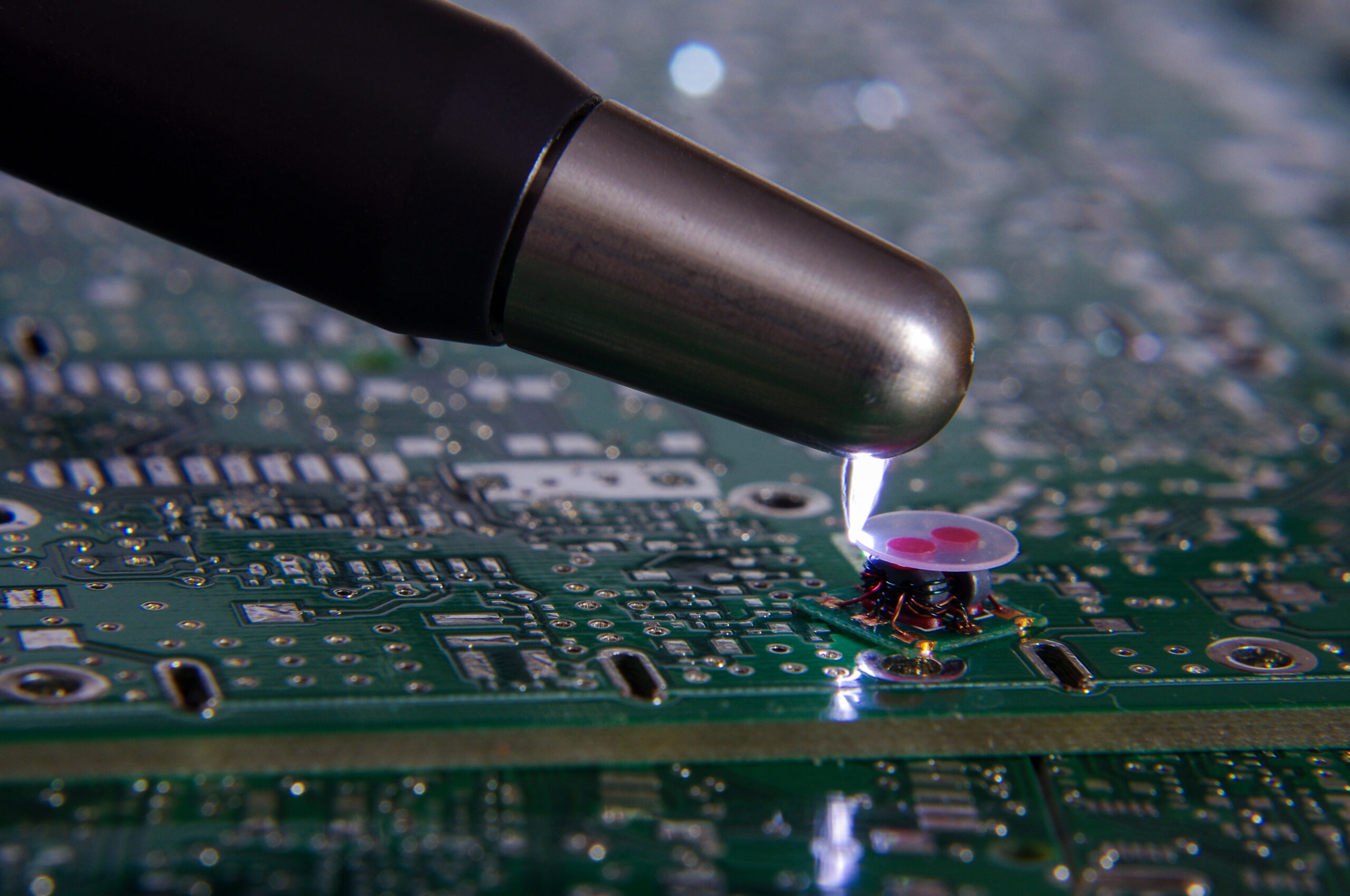
ESD – Electrostatic discharge
What is ESD anyway?
Electrostatic discharge (ESD) is the term used to describe electrostatic discharge. For potential equalization, a breakdown or spark occurs, which generates high electrical voltage pulses on electronic devices. The best known sensation is the feeling of an electric shock. For example, when plastic castors of office chairs roll across floors, clothes sleeves slide across desks or rubber soles shuffle across the floor, electrical charge builds up due to friction, which cannot be dissipated due to the insulating properties of plastics. When touching any earthed objects and appliances, the built-up energy is discharged and electrostatic discharge occurs.
“electrostatically hazardous”

Around 3,000 volts are required for people to feel a discharge. However, many electrostatic discharges are well below 3,000 volts and therefore cannot be felt by humans. The drier the air, the stronger the charge. In extremely dry air with a humidity of 10% to 20%, even opening a plastic bag can generate charges of up to 20,000 volts.
Although 20,000 volts sounds quite threatening, electric shocks caused by electrostatic discharge are not normally harmful to health. However, they can still be dangerous. The moment of shock poses a risk of accident and when handling explosive substances (e.g. paints), an electrostatic discharge of 50 volts can become an igniting spark that can trigger an explosion.
“electrostatically protective”

With electronic components, just 30 volts of uncontrolled electrostatic discharge is enough to damage them. Further further, it only takes 100 volts to erase information on a magnetic data carrier and 5 volts to damage highly sensitive read heads of hard disks during their manufacture.
In many cases, however, discharges of static electricity primarily cause latent weaknesses that only become apparent as defects or faults after some time and under specific conditions.
ESD protection is therefore extremely important for companies in the electronics industry.
Training movie
How can you protect yourself against ESD?
“Where there is no charging, there is no discharging”
As few movements as possible and ESD-safe equipment reduce the risk of static charging by people to a minimum.
The establishment of an Electrostatic Protected Area (EPA), in which ESD-sensitive components can be handled safely, requires a comprehensive protection concept.
The key points here are both internal and external protection of components and organizational measures that actively involve employees, suppliers and visitors.
A comprehensive EPA protection zone includes the following areas:
Earthing of persons
People
are the main sources of electrostatic charge. Shoes and
Workplace
Electrostatic charge is discharged via the work surface and an earthing cable, so that the workplace remains charge-neutral. The chair, the footrest or the standing aid should also have ESD protection.
Markings
Markings on the floor identify ESD-protected areas. Equally important are signs, labels, adhesive tape and stickers to indicate potentially hazardous components and assemblies.
Storage / container
Dissipative ESD containers, Euro containers, SMD small containers, drawer inserts, drawer magazines, PCB stands, foams, shipping boxes, bottles, foil bags and tubular films for the transport and storage of components protect endangered components. The transport trolleys should have dissipative wheels.
Floor
The floor should be dissipative and meet the required limit values . When cleaning ESD floor mats or floor coverings, only use care products that do not build up layers so that the discharge values remain within the desired range. Also use ESD brooms, sweepers, spatulas, cloths and waste containers.
Furthermore,
it is necessary to regularly check protective equipment and material
using measurement technology and to replace it if necessary. Measurements should be taken when entering
The leakage resistance should have the following values:
- Working surface: between 7.5 x10⁵Ωand109Ω
- Soil: less than109Ω
- Chair: less than 1010Ω
- Shoes, gloves, brushes, paintbrushes, etc.: less than 1011Ω
It is important to clarify in advance of an EPA installation how many volts of electrostatic discharge the material to be processed can tolerate.
We will be happy to advise you. Contact us at any time for any questions and advice.
Important terms
Leakage resistance
The term leakage resistance refers to the resistance between an electrode on the top of a device and the ESD earthing point.
Antistatic
Means “charge-reducing property”. Can be a special type of plastic, for example.
Conductive
Means “conductive”. Materials where the surface resistance is greater than102 ohms and less than105 ohms (according to DIN EN 61340-5-1).
Dissipative
Means “dissipative”. Materials where the surface resistance is greater than105 ohms and less than 1011 ohms.
EBP = Earth Bonding Point
Is the marked connection for all ESD earthing measures. The EBP must not be used as a protective earth conductor.
Electrostatic charge
The static electrical charges that arise through mechanical contact and subsequent separation of materials.
EPA = Electrostatic Protected Area
A work area equipped with ESD protection measures, in which electrostatically sensitive components can be handled without damaging them.
ESD = Electrostatic Discharge
Electrostatic discharge between charged bodies through direct contact or flashover.
ESDS = Electrostatic Discharge Sensitive Devices, also EGB = Electrostatic sensitive device
Parts or components that can be damaged by electrostatic discharges during processing or transportation.
Insulator
Materials are insulating if the surface resistance is greater than 1011 ohms.
Low charging
Thanks to this property, materials do not or only insignificantly become charged on contact and subsequent separation or friction.
