Loctite threadlockers – low-strength, medium-strength or high-strength
A Loctite screw lock – sometimes called a Loctite thread lock – prevents a screw from unscrewing on its own – the main cause of machine and system failures.
There are different strengths of Loctite threadlockers: low-strength, medium-strength and high-strength. In this article, you will find out which Loctite threadlocker is best suited to your application and which threadlockers you can buy from the Swiss online store abovo.
What types of threadlockers are there?
A distinction is made between friction-locking (e.g. spring washers), positive-locking (e.g. lock washers with tabs) and material-locking screw locking devices (e.g. adhesive). On the other hand, a distinction is made between loosening locks, loss locks and setting locks.
The problem with mechanical threadlockers is usually that they do not close the gap between the internal thread of the nut or blind hole and the external thread of the bolt. Approximately 85 percent of the thread surfaces of the thread partners are separated by an air gap, meaning that only 15 percent of the surfaces of the external and internal threads have direct metal contact. With many mechanical screw locking devices, a loss of preload force or clamping force can therefore not be avoided, because despite mechanical locking, the connections often loosen due to vibrations, thermal expansion and/or an unsuitable torque.
What is Loctite?
Under the Loctite brand, the adhesive manufacturer Henkel produces various thread-locking adhesives, including Loctite threadlockers.
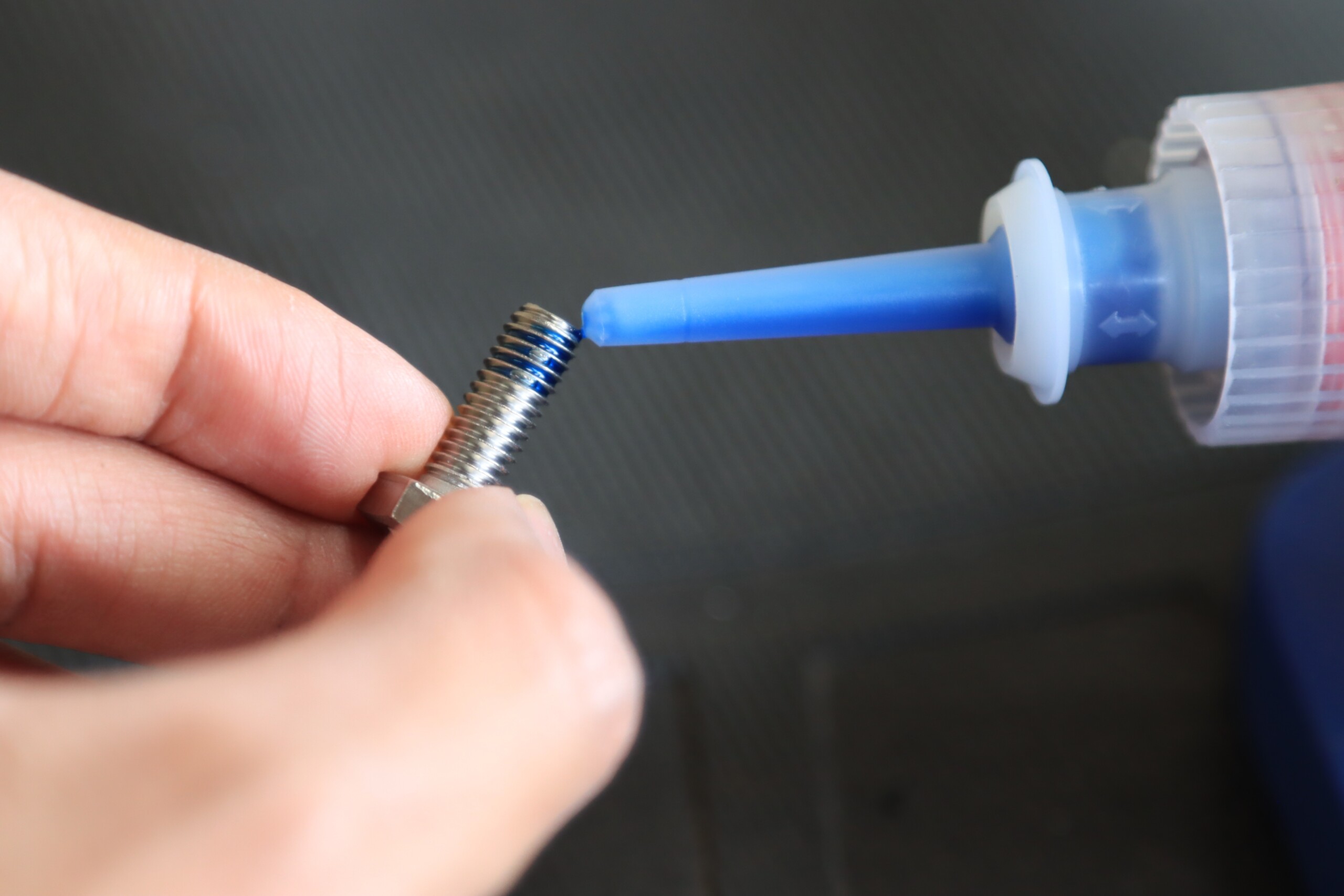
Loctite threadlockers are vibration-resistant as they fill the gap between the screw and the thread with adhesive and firmly bond the two parts together after curing, preventing the screw from loosening even under vibration.
Advantages of Loctite threadlockers
The use of Loctite threadlocker has the following advantages:
- Material-locking connections prevent screws from loosening on their own due to vibration and thermal stresses
- Protection against loss of clamping force
- Corrosion protection: Sealing of the air gap in the thread prevents the ingress of moisture
- Seizure and wear are prevented, enabling easy disassembly
- Cost reduction: lower construction, production and storage costs
- Reducing the risk of production downtime
How do I choose the right Loctite threadlocker?
When selecting a suitable Loctite threadlocker, you should pay attention to the following points, among others:
- Strength of the threadlocker
- Dismantling frequency and dismantling environment
- Thread size
- Application procedure (before or after installation)
The strength of Loctite threadlockers is divided into low strength, medium strength and high strength, whereby the respective strengths can also be recognized by the color of the product:
- low-solid: violet
- medium strength: blue or green
- high-strength: green or red
The frequency of disassembly can also be a selection criterion for the right Loctite threadlocker, as a hand tool is not always sufficient for disassembling high-strength threadlockers, for example, and the relevant areas may need to be heated additionally. The disassembly environment, i.e. the metal used, can also be decisive when it comes to choosing the right threadlocker, as certain metals can easily break during disassembly.
With regard to the thread size, low-viscosity Loctite threadlockers should be used for small threads and high-viscosity or thixotropic threadlockers from Loctite for large threads.
Finally, the question arises as to whether Loctite threadlocker should be applied before or after assembly, as there are also liquid Loctite threadlockers with a capillary effect that can be used to subsequently secure screws on components that have already been assembled.
Loctite Threadlocker Chart
Below you will find the “Loctite Threadlocker Table,” presented both as a selection table and as a product list:
Source: Henkel – Loctite, Bonderite, Technomelt, Teroson, Product Catalog: Adhesives, Sealants, and Surface Technology for Industry, Edition 3.2
Source: Henkel – Loctite, Bonderite, Technomelt, Teroson, Product Catalog: Adhesives, Sealants, and Surface Technology for Industry, Edition 3.2
Areas of application for Loctite threadlockers
Loctite threadlockers are used in many different areas, with the types of Loctite threadlockers determining the intended use, as shown in the following table:
| Types of Loctite threadlockers | Field of application |
| Low-strength threadlocker (violet) | Adjusting screws, calibration screws, small screws in glasses and laptops, for example |
| Medium-strength threadlocker (blue) | Fastening screws for machine tools, gearboxes, pumps, presses and compressors, screws for domestic components, etc. |
| Medium and high-strength threadlocker (green) | Subsequent screw locking on assembled components with already tightened screws, for example on control and measuring devices, carburetors or bicycles, for example |
| High-strength threadlocker (red) | Heavy machinery, engine mounts, appliances with strong vibrations such as lawn mowers and snow blowers |
Threadlockers from Loctite at abovo
In Switzerland, Loctite threadlockers can be purchased in the online store of the Henkel distributor abovo. The following Loctite threadlockers can be found in the abovo range:
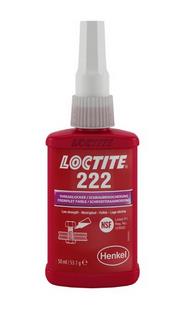
Loctite 222 low strength
Loctite 222 threadlocker is low-strength and therefore particularly suitable for metals that can break easily when the screws are removed, such as aluminum and brass.
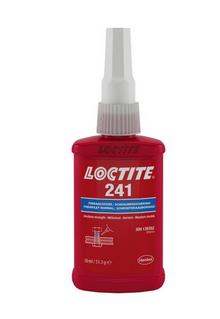
Loctite 241 medium strength
Loctite241 threadlocker is medium-strength and suitable for small metal threads up to M12.
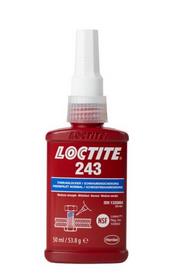
Loctite 243 medium strength
The Loctite 243 threadlocker also has medium strength, can be used universally and is suitable for all metals and screw sizes up to M36. Disassembly is possible with normal hand tools.
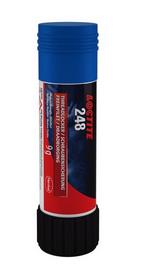
Loctite 248 medium strength
Loctite 248 is also a non-drip threadlocker in stick form with medium strength.
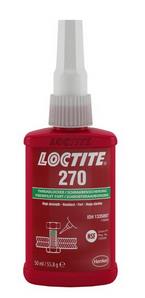
Loctite 270 high strength
Loctite270 threadlocker has a high strength and is suitable for all metals and screw sizes up to M20. For disassembly, it may be necessary to heat the area locally. This threadlocker is therefore particularly suitable for systems that do not need to be disassembled regularly.
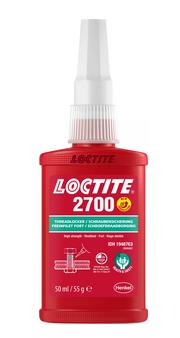
Loctite 2700 high strength
Loctite 2700 threadlocker has a high strength and is also suitable for all metals and screw sizes up to M20. The special feature of Loctite 2700 is that no hazard symbols, R or S phrases are required. It does not contain any declarable carcinogenic, mutagenic or reprotoxic substances. This threadlocker is suitable for installations where disassembly is not required.
Loctite 272 high strength
Loctite 272 threadlocker is high-strength and suitable for all metal threaded connections. This threadlocker is characterized by its high temperature resistance.
Removal of adhesive screw locking devices
As the Loctite threadlocker creates a material bond between the nut or blind hole and the screw, the contact surfaces are preserved, which enables reliable disassembly of the screw. There is a defined breakaway torque. Depending on the strength, disassembly is carried out exclusively using hand tools (low-strength and medium-strength threadlockers) or additionally by local heating (high-strength threadlockers).
More information about Loctite threadlockers
We at the abovo online store will be happy to provide you with further information on the various Loctite threadlockers and help you make the right choice for your applications.
The easiest way to contact our experts is by telephone or e-mail:
- Telephone number: +41 32 552 44 44
- E-mail: info@abovo.ch